Team incentives or team buildings?

Rewards, connection and what teams really need
A dinner. A day out. A bonus for hitting targets. These are initiatives undertaken with the best of intentions. They’re meant to boost energy, foster a sense of connection and motivate people. And yet, sometimes you’re left with the nagging feeling that something isn’t quite right.
Why don’t teams suddenly start working better together?
Why do the same tensions resurface?
Why does the enthusiasm fade so quickly?
That has little to do with ingratitude.
It has everything to do with how our brains work.
Why rewards are so powerful
Our brain reacts strongly to external stimuli. Rewards trigger a response. They sharpen our focus and spur us into action. This mechanism is functional and can be explained in evolutionary terms. But activation is not the same as development.
Research into self-regulation shows that mental energy is not unlimited. When behaviour is driven primarily by external incentives, attention shifts towards achieving the result itself, rather than deepening collaboration or improving patterns of interaction. In other words, people do whatever is necessary to achieve the goal. As soon as the incentive disappears, that extra focus fades away too.
The brain conserves energy and reverts to familiar patterns. Reward can therefore be motivating. But it does not change the underlying dynamics.

Incentives are not the problem
Let’s be clear: team incentives aren’t a bad thing.
They’re valuable for celebrating achievements, showing appreciation and marking success. They strengthen team spirit when the foundation is already sound. The problem arises when we expect rewards to achieve what only development can. When incentives are expected to resolve structural tensions, unclear roles or a lack of trust, they remain superficial.
Development requires something else:
- Time
- Dialogue
- Reflection
- And sometimes, a bit of discomfort
The quiet power of psychological safety
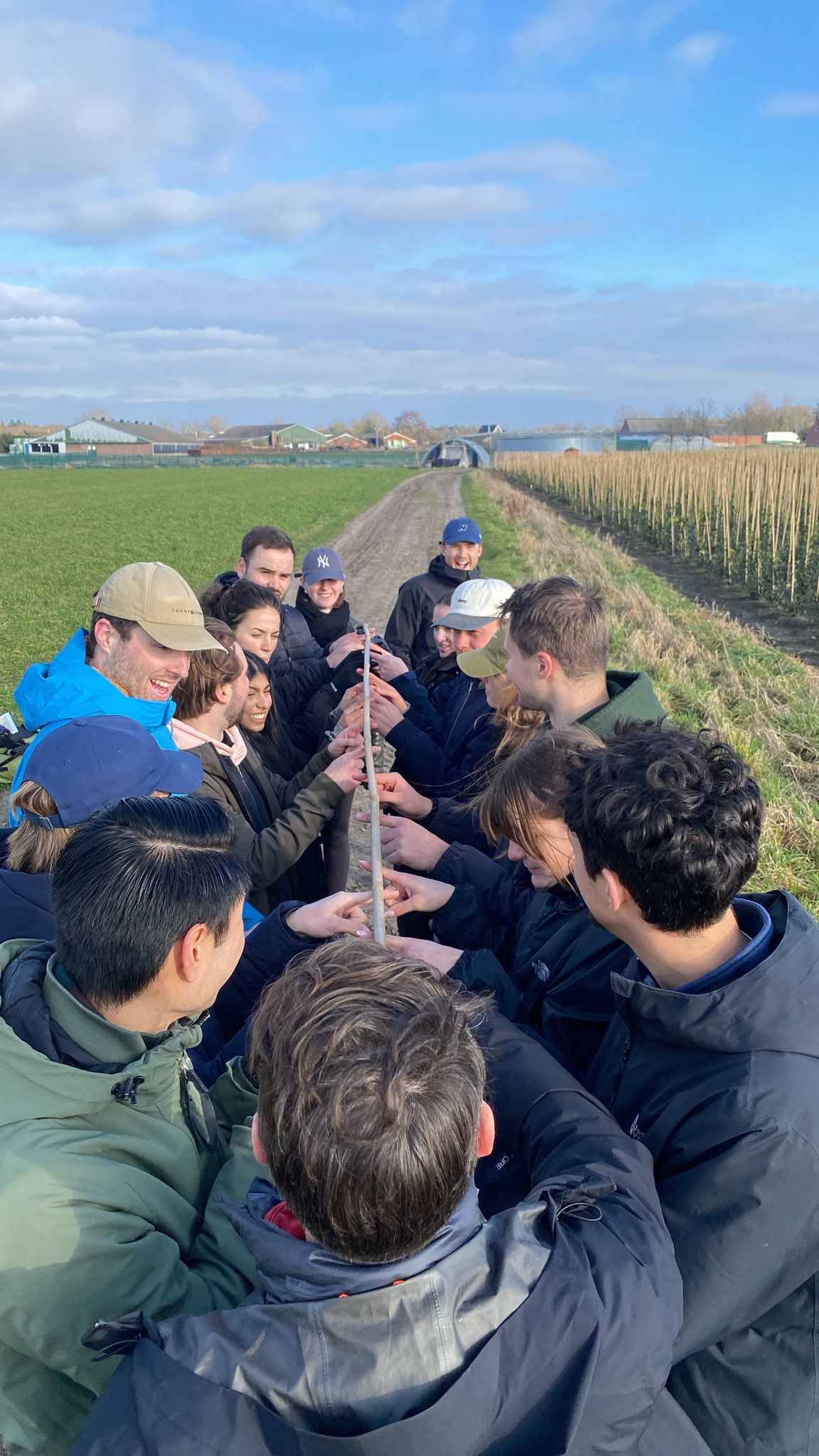
Team building focuses on what is less visible, but all the more crucial: trust. Psychological safety. The space to say what needs to be said, even when it sometimes causes friction.
When people feel safe within a team, the brain needs to expend less energy on self-protection.
Space is created.
For reflection.
For learning.
For creativity.
Not because it’s fun. But simply because it works. Research within self-determination theory has shown for years that lasting motivation stems from autonomy, relatedness and competence, not from external incentives alone.
Fun versus serious? A false contrast!
The distinction is often reduced to ‘fun’ versus ‘serious’. As if incentives were superficial and team-building were, by definition, a serious business. That is a misconception, because the real difference lies in the intention behind it.
→ A team incentive is designed to show appreciation and celebrate.
→ Team building is designed to develop behaviour and cooperation, and that can be just as much fun.
When rewards backfire
In organisations where collaboration is under strain, people are sometimes quick to resort to rewards. More incentives. More fun activities. Understandable. But from a psychological perspective, this is often counterproductive.
Increased external pressure heightens mental strain and narrows one’s perspective. People focus on their own role, rather than the bigger picture.
Team building that creates space for dialogue and awareness actually reduces that very pressure. It helps teams see what is going on, rather than covering it up.
A conscious choice for sustainable collaboration
Strong organisations understand that difference. They use incentives to show appreciation. And team-building to facilitate learning. They do not expect a reward to achieve what only development can.
In a world that is becoming ever faster and more complex, teams need more than just a motivational boost. They need trust. Security. And the ability to continue working together when the going gets tough.
Team incentives can boost morale. Team-building builds resilience.
Making that distinction is not just a minor detail. It is a conscious choice in favour of sustainable collaboration.
Discover our approach
Does your organisation want to look beyond mere incentives? And build trust, psychological safety and sustainable collaboration?
At Better Minds, we support teams in strengthening their mental resilience and collaboration, drawing on both scientific insights and practical experience. Take a look at our various services below and feel free to contact us for a fully bespoke quote.
Sources:
Ryan, R. M., & Deci, E. L. (2020). Intrinsic and extrinsic motivation from a self determination theory perspective. Definitions, theory, practices, and future directions. Contemporary Educational Psychology, 61, 101860. https://doi.org/10.1016/j.cedpsych.2020.101860
Baumeister, R. F., Bratslavsky, E., Muraven, M., & Tice, D. M. (1995). Losing control. How and why people fail at self regulation. Academic Press.
Csikszentmihalyi, M. (2008). Flow. Psychologie van de optimale ervaring. Ten Have.
Frazier, M. L., Fainshmidt, S., Klinger, R. L., Pezeshkan, A., & Vracheva, V. (2024). Psychological safety. A meta analytic review and extension. Journal of Applied Psychology, 109 (1), 1–23. https://psycnet.apa.org/doiLanding?doi=10.1037%2Fapl0001099
.png)