The Zebra and the inbox
.avif)

A zebra runs for its life
The moment the danger has passed, the animal drops right back into rest. No meeting it replays in its head three more times. No email that pops back into its mind at 11pm. The danger is gone, the system can shift back down. Time to graze again.
For us, it's often different.
After a meeting, a difficult email, or a deadline, we sometimes need hours to settle down. We replay the conversation in our heads or mentally leap ahead to tomorrow. Sometimes we can't even shift back down at night, lying in bed while our head is still hard at work.
Jealous of the zebra?
Then here's the good news: our system, too, is built to switch between activation and recovery. It's just that our environment looks quite different today.
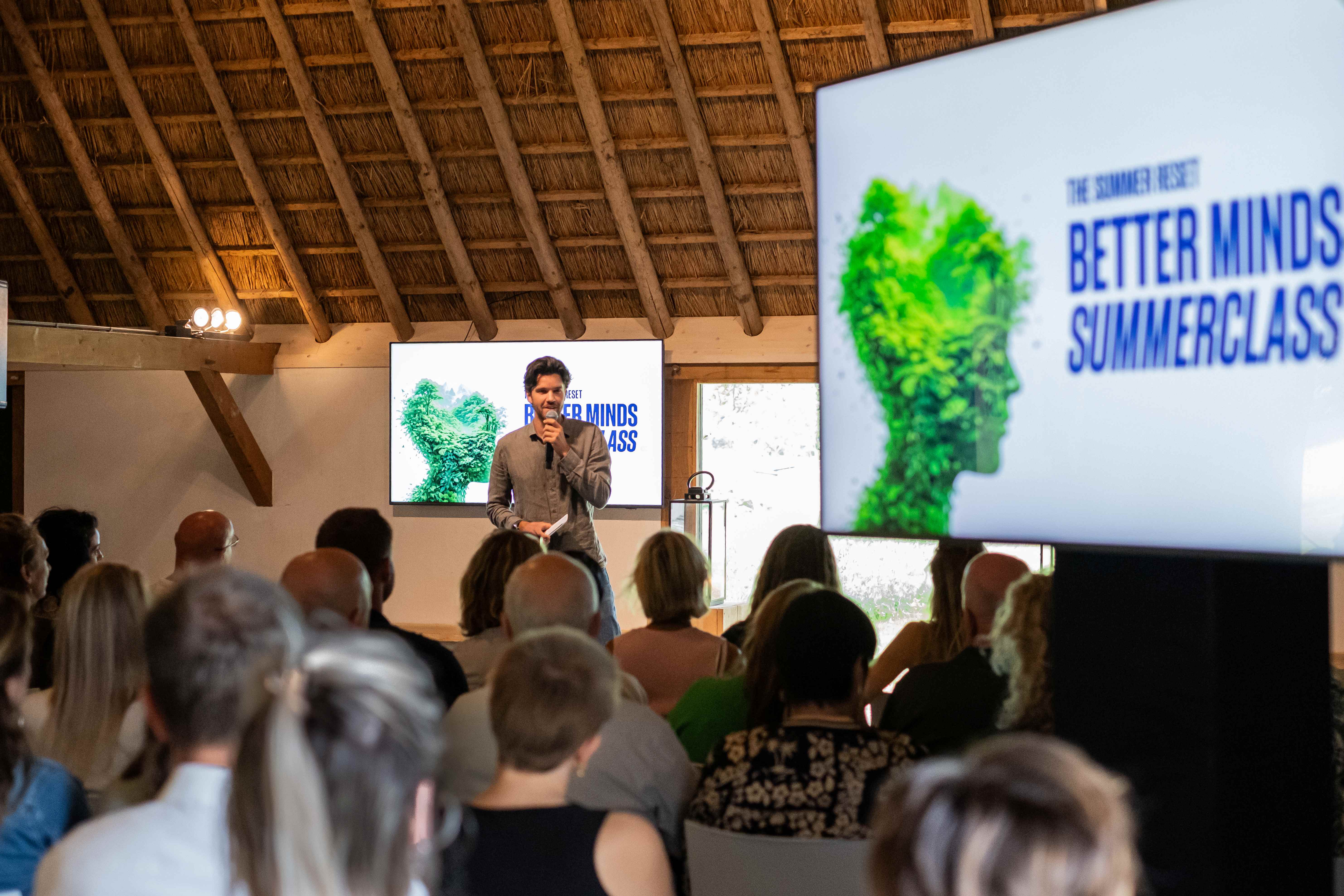
During our Summer Class in July, my colleagues talked about oscillation as one of the keys to resilience. One insight that really stuck with me was this: resilience doesn’t mean always staying calm, but being able to spring into action when necessary and then return to a state of calm afterwards.
Activation in itself is not the problem. The problem arises when activation becomes the norm and recovery the exception.
But what happens when we are constantly ‘switched on’? And how do we re-establish a healthier rhythm? The speakers introduced us to three principles: oscillation, allostasis and recovery.
1. Our body loves waves

Look at your body and you'll find almost no straight lines anywhere. Your heart rate speeds up and slows down, your breathing changes, your alertness and energy rise and fall. Your body functions precisely by varying.
We call this principle oscillation: your system's ability to move between effort and recovery, focus and letting go, activation and rest.
Yet we increasingly organize our lives as if there's only one direction: up.
More focus, more speed, more availability, more input, more output.
When our energy drops, we try to fix it with coffee, discipline, or by just pushing through a bit longer. But a healthy system doesn't need to function permanently at its peak. What it needs, above all, is to be able to switch well.
2. Stress is not the enemy

When you give an important presentation or have a difficult conversation, your body shifts into a higher gear. Your heart rate may rise, and hormones like adrenaline and cortisol help your body prepare for what the situation demands.
This ability to maintain stability by adapting to changing circumstances is called allostasis. It's a healthy and essential adaptive mechanism.
However, when our stress systems are repeatedly activated, stay active too long, or can't recover sufficiently, allostatic load can build up: the cumulative wear and tear of constantly having to adapt.
It's not about one hectic week — it's about the sum total over time. So take a look at your own workday. What has become so normal that you barely even notice it anymore?
- a calendar with no white space
- eating lunch in front of a screen
- being constantly reachable
- filling every silence with your smartphone
- quickly answering that one email at night
Individually, these behaviors aren't necessarily problematic. It's the pattern they create together that matters.
3. An organizational issue

Organizations also help determine how much room employees get to shift back down.
In Belgium, around a quarter of all long-term work incapacity in 2025 was due to depression or burnout (RIZIV, 2026). In the Netherlands that same year, 20.6% of employees reported burnout symptoms (TNO & CBS, 2026).
Anyone who wants to strengthen resilience must therefore look beyond the individual. How much room is there between demanding tasks? What expectations exist around availability? And what behavior do managers themselves model? Curious how we can help make this happen in your organization? Feel free to contact us.
4. Recovery is part of performance

In sport, we take recovery for granted. Nobody expects muscles to get stronger by putting them under constant strain. Why should different rules apply to mental performance?
And yet I catch myself doing the same thing. Whilst listening to the speakers, I realised just how familiar this was to me too. A spare quarter of an hour in my diary? I can quickly squeeze in an email there. A quiet evening? Ideal for finishing off a quick task. A walk? I can listen to that one podcast whilst I’m out. Before you know it, even rest becomes something that has to be used efficiently.
5. What have we come to normalize?
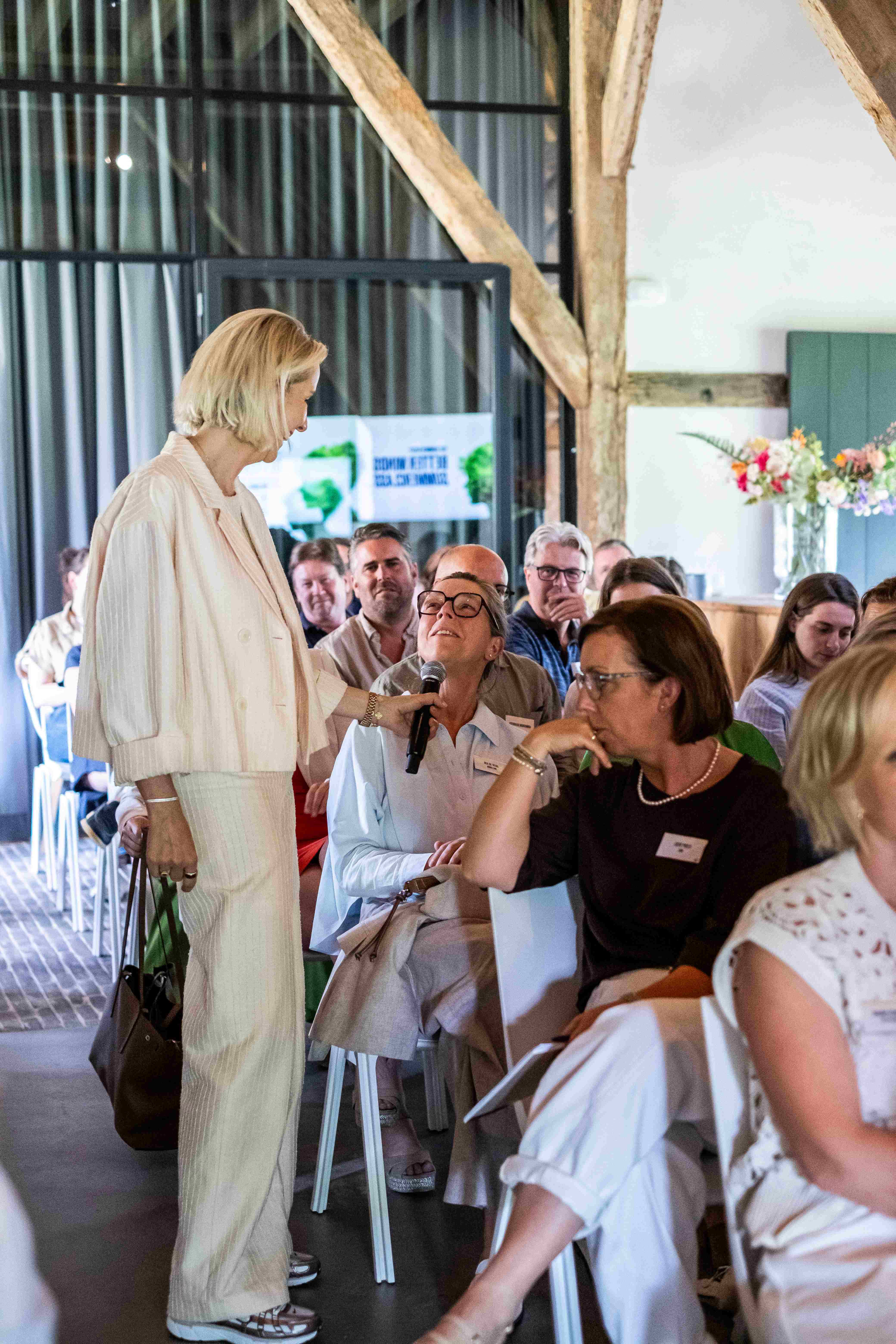
Perhaps that is precisely where the challenge lies: in daring to question our own automatic habits once again. Because much of what keeps us constantly ‘switched on’ no longer feels like pressure after a while.
It simply feels like the way we work. The way we live.
Yet recovery does not have to be grand or perfectly planned. It could be a walk after some intensive thinking, lunch without a screen, or a bit of breathing space between two appointments. Recovery isn’t the opposite of performance, but rather a prerequisite for it.
What I took away most from the Summer Class is that resilience doesn’t mean we have to learn to run for ever longer. Rather, it means we can step up when necessary and recognise when it’s time to shift down a gear.
Since then, I’ve been trying to ask myself this question every now and then: What have I come to regard as normal over the years?
The zebra doesn’t need to think about when the lion has gone.
We, apparently, do.
Sources
McEwen, B. S. (1998). Stress, adaptation, and disease: Allostasis and allostatic load. Annals of the New York Academy of Sciences, 840, 33–44.
Rijksinstituut voor Ziekte en Invaliditeitsverzekering. (2026). Arbeidsongeschiktheid in 2025: Hoeveel mensen in invaliditeit door depressie of burn out? Hoeveel kost dat aan uitkeringen? RIZIV.
TNO, & Centraal Bureau voor de Statistiek. (2026). Nationale Enquête Arbeidsomstandigheden 2025: Resultaten in vogelvlucht. TNO.
.avif)